
From Waste to Value:The ALGANOVA Journey
A next-gen, circular and integrated biorefinery
The ALGANOVA biorefinery recipe
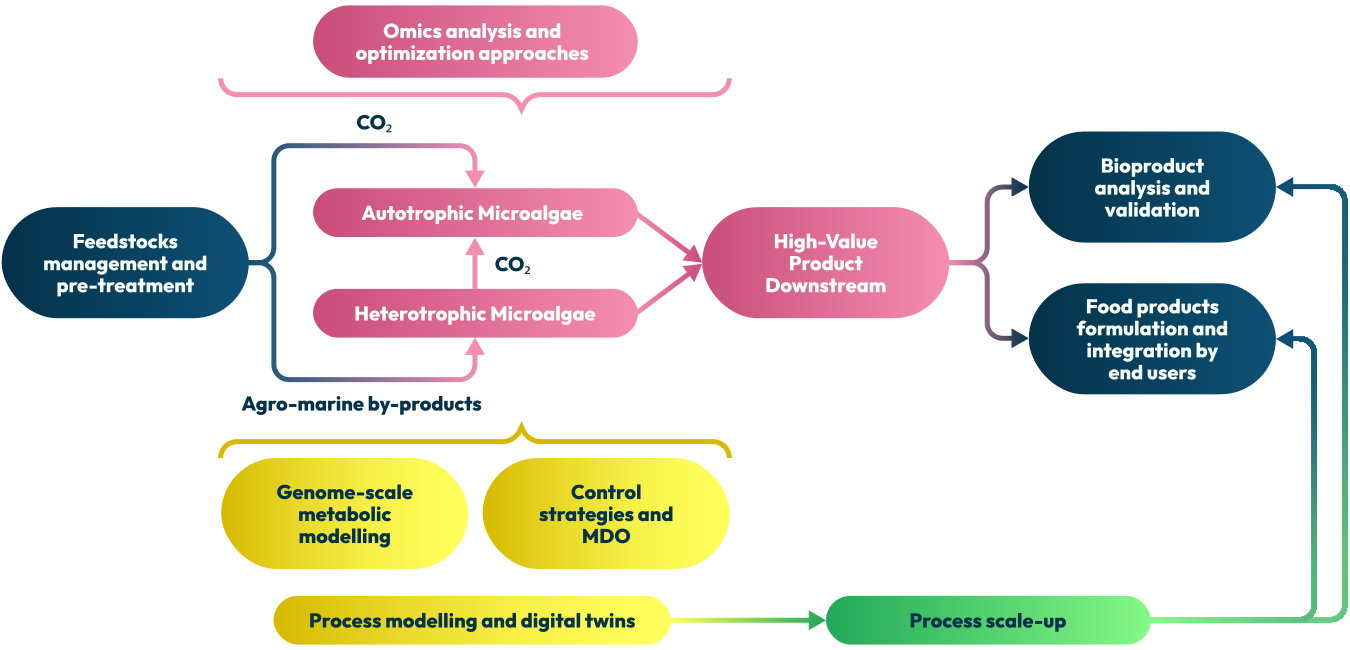
ALGANOVA proposes a dual-mode biorefinery integrating autotrophic and heterotrophic microalgae cultivation operating on a circular and zero-waste model to ensure year-round, feedstock-flexible production of nutritional microalgal proteins. Our process is based on two main types of industrial feedstock: agro-marine by-products and biogenic industrial CO₂ waste.
Step 1
Sourcing the right ingredients: feedstock identification, collection and pre-treatment
The process begins with the selection and preparation of agro-marine by-products, such as fruit peels, mussel cooking water and coastal seaweed. While these materials are rich in complex carbohydrates, they require pre-treatment to unlock their potential.

The composition of carbohydrates, proteins, lipids and minerals in the feedstocks is analysed, as well as their safety (e.g. heavy metals).

Tailored enzymatic treatments are then applied to break down the complex polysaccharides into fermentable sugars.

The process conditions, such as temperature, pH and enzyme concentration, are then optimised to maximise sugar release.

The resulting hydrolysates are then purified and concentrated to create a nutrient-rich medium for cultivating microalgae.
Simultaneously, biogenic CO₂ from industrial processes is captured, analysed and prepared as a sustainable carbon source for producing autotrophic microalgae.
Step 2
Cooking starts: microalgae biomass production
In this phase, algal biomass is produced using a parallel autotrophic and heterotrophic microalgal cultivation strategy.
Cultivation modes
Autotrophic
What
Dunaliella salina, one of the most widely produced microalgae species in Europe, is cultivated in photobioreactors using light and captured CO₂.
How
Processes are optimised to increase the levels of protein and carotenoids.
Why
The system is designed to be scalable and to use resources efficiently.
Heterotrophic
What
Chlorella spp., one of the most widely commercialised and studied algae, is cultivated on sugar-rich hydrolysates.
How
Cultivation is scaled up in controlled fermenters with integrated CO₂ management.
Why
Advanced biological analysis improves the growth and function of the microalgae.
Step 3
Building the flavors: extraction of biomass compounds
Next, a cascade extraction process is used to recover multiple high-value compounds from the microalgal biomass once it has been harvested. Advanced analytical methods ensure the quality, purity and functionality of all extracted compounds.

Cell disruption techniques improve extraction efficiency.

Proteins are extracted via an alkaline solubilisation process, followed by centrifugation and acid precipitation.

Lipids and carotenoids are recovered using green technologies such as supercritical CO₂.
Step 4
Plating up and tasting: bioproduct analysis and food prototypes
The resulting ingredients are rigorously tested for nutritional composition and safety in line with EU and EFSA standards. Bio-products will be analysed to detect any undesirable compounds and to assess their nutritional profile, including fatty acids, oxidation stability, digestibility and antioxidant activity.
These ingredients are then incorporated into two main product categories:

Microalgae-based high-moisture extrusion (HME) products
optimised to replicate nutritional functionality and texture of conventional protein-rich food, such as fish and meat products.

Protein-enriched bakery products
with an improved amino acid profile compared to conventional baked goods.
Step 5
Refining the recipe: computational approaches for optimization and scale-up
To maximise efficiency and facilitate industrial-scale production, ALGANOVA utilises cutting-edge digital technologies, including genome-scale metabolic models, digital twins and automated control systems. These technologies optimize microalgae growth, improve biorefinery performance, reduce production costs and ensure reliable operation under changing conditions.